Quick Answer
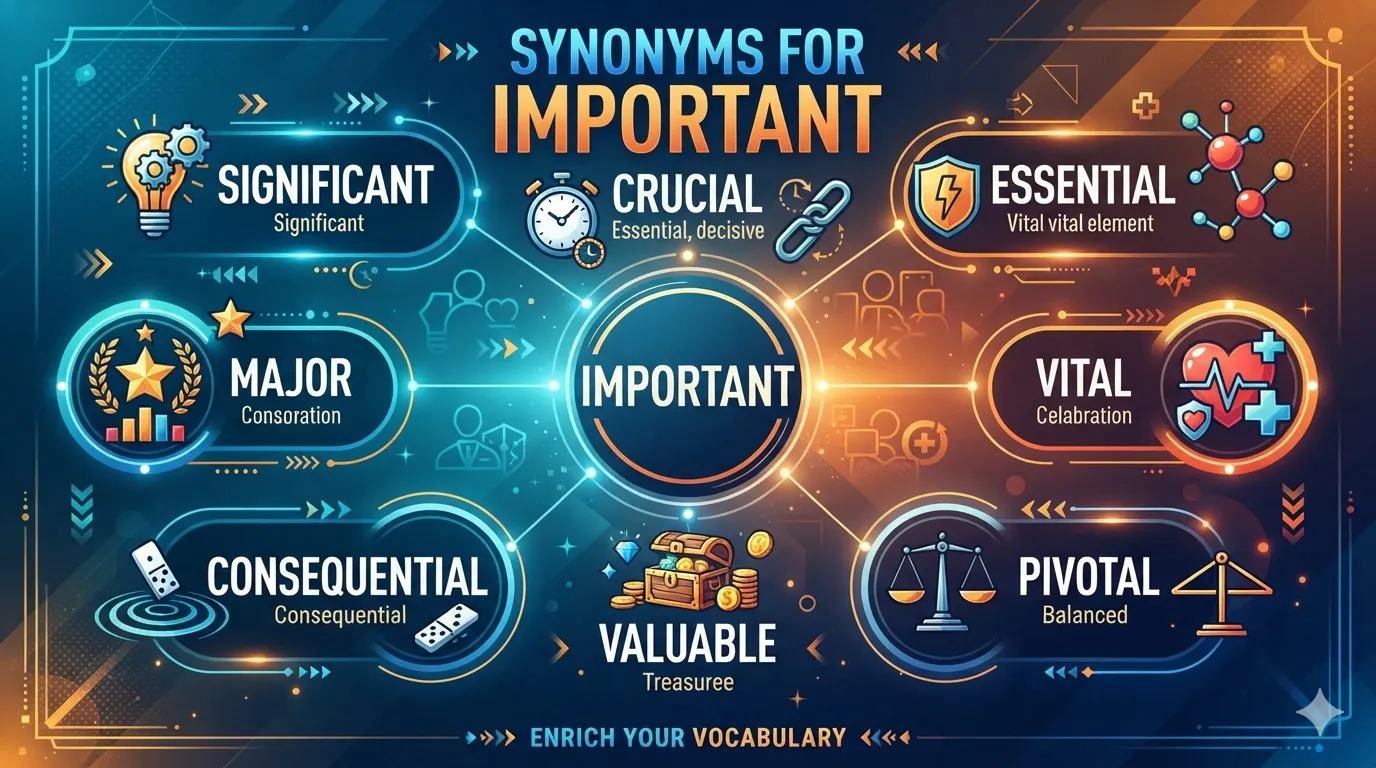
The best synonyms for important are essential, crucial, vital, significant, critical, key, and fundamental. These words describe something that matters a lot or has a strong effect on people, decisions, or outcomes. Choose your synonym based on formality, strength, and context. Some fit casual writing, while others suit formal or academic work.
Have you ever written the word “important” three times in one paragraph and felt stuck? You’re not alone. Many students, bloggers, and professionals search for synonyms for important because the word gets repetitive fast, especially in essays, emails, and articles.
The good news is English gives you many strong options. Some synonyms for important, like crucial or vital, sound more urgent. Others, like significant or notable, feel more formal. Knowing which word fits your sentence makes your writing sharper and more interesting to read.
This guide breaks down over 25 synonyms for important, with simple meanings, real examples, and clear usage tips so you always pick the right word.
Pronunciation
Important
IPA: /ɪmˈpɔːrtənt/
Pronounced as: im-POR-tint
Part of Speech
Important is an adjective. It describes a noun and shows that something has value, meaning, or a strong effect.
- As an adjective: This is an important decision.
There is no verb or adverb form of “important” itself, but related words exist:
- Noun form: importance (The importance of sleep is often ignored.)
- Adverb form: importantly (Most importantly, stay calm.)
Grammar Usage Section
Important usually appears before a noun or after the verb “to be.”
- Before a noun: an important meeting
- After “to be”: This meeting is important.
Common sentence patterns:
- It is important to + verb (It is important to arrive early.)
- It is important that + clause (It is important that you listen.)
- Important for + noun (Sleep is important for health.)
Common mistake: Learners often write “important for me” when they mean “important to me.” Use important when talking about personal value, and important for when talking about a purpose or benefit.
Synonyms Overview Table
| Synonym | Strength | Formality |
| Essential | Strongest | Neutral |
| Crucial | Strongest | Neutral |
| Vital | Strongest | Neutral |
| Critical | Strongest | Formal |
| Paramount | Strongest | Formal |
| Indispensable | Strongest | Formal |
| Significant | Strong | Neutral |
| Key | Strong | Informal |
| Major | Strong | Neutral |
| Fundamental | Strong | Formal |
| Pivotal | Strong | Formal |
| Momentous | Strong | Literary |
| Consequential | Strong | Formal |
| Urgent | Strong | Neutral |
| Necessary | Strong | Neutral |
| Substantial | Related | Neutral |
| Relevant | Related | Neutral |
| Notable | Related | Neutral |
| Meaningful | Related | Neutral |
| Valuable | Related | Neutral |
| Primary | Related | Formal |
| Principal | Related | Formal |
| Weighty | Related | Literary |
| Serious | Related | Neutral |
| Central | Related | Neutral |
Main Content: Detailed Synonyms
Essential
Meaning: Something essential is needed and cannot be left out.
Examples:
- Water is essential for every living creature.
- Honest communication is essential in a strong friendship.
Best Used When: you want to show something is a basic requirement, not optional.
Tone: Neutral
Common Collocations: essential for, absolutely essential, essential skills
Crucial
Meaning: Something crucial can change the result of a situation.
Examples:
- The final interview round was crucial for landing the job.
- Getting enough rest before the exam was crucial.
Best Used When: describing a turning point or major factor in an outcome.
Tone: Neutral
Common Collocations: crucial role, crucial moment, crucial decision
Vital
Meaning: Something vital is so important that things could fail without it.
Examples:
- Clean air is vital for a healthy city.
- Teamwork was vital to finishing the project on time.
Best Used When: emphasizing survival, health, or the success of a system.
Tone: Neutral
Common Collocations: vital role, vital information, vital signs
Critical
Meaning: Something critical is extremely important and often urgent.
Examples:
- The doctor said quick treatment was critical.
- Backup power is critical during a storm.
Best Used When: the situation involves risk, danger, or a tight deadline.
Tone: Formal
Common Collocations: critical thinking, critical situation, critical stage
Paramount
Meaning: Something paramount is more important than anything else.
Examples:
- Safety is paramount at the construction site.
- For the coach, player health was paramount.
Best Used When: ranking one priority above all others.
Tone: Formal
Common Collocations: paramount importance, paramount concern
Indispensable
Meaning: Something indispensable cannot be removed or replaced.
Examples:
- Her advice became indispensable to the new manager.
- A good editor is indispensable for any writer.
Best Used When: describing a person or tool that a system truly depends on.
Tone: Formal
Common Collocations: indispensable tool, indispensable member
Significant
Meaning: Something significant has a noticeable effect or meaning.
Examples:
- The company made a significant improvement in customer service.
- Losing weight had a significant impact on his energy.
Best Used When: describing measurable or noticeable change.
Tone: Neutral
Common Collocations: significant increase, significant difference
Key
Meaning: Something key plays a central part in success.
Examples:
- Patience is key when teaching young children.
- Communication was the key factor in solving the conflict.
Best Used When: highlighting one main factor among several.
Tone: Informal
Common Collocations: key factor, key player, key point
Major
Meaning: Something major is large in size, effect, or importance.
Examples:
- The company announced a major change in leadership.
- There was a major difference between the two offers.
Best Used When: comparing size or scale of importance.
Tone: Neutral
Common Collocations: major issue, major role, major decision
Fundamental
Meaning: Something fundamental forms the base that everything else depends on.
Examples:
- Trust is fundamental to any relationship.
- Understanding grammar is fundamental to good writing.
Best Used When: describing a foundation or starting point.
Tone: Formal
Common Collocations: fundamental principle, fundamental right
Pivotal
Meaning: Something pivotal causes a major shift or turning point.
Examples:
- The meeting was pivotal in changing the company’s direction.
- Her mentor played a pivotal role in her career.
Best Used When: describing a moment that changes everything after it.
Tone: Formal
Common Collocations: pivotal moment, pivotal role
Momentous
Meaning: Something momentous is important because of its lasting effect.
Examples:
- Signing the contract was a momentous step for the small business.
- It was a momentous day when the bridge finally opened.
Best Used When: describing large, memorable, historic events.
Tone: Literary
Common Collocations: momentous occasion, momentous decision
Consequential
Meaning: Something consequential leads to important results.
Examples:
- The judge’s ruling was consequential for future cases.
- It was a consequential mistake that cost the team the game.
Best Used When: focusing on outcomes and long-term effects.
Tone: Formal
Common Collocations: consequential decision, highly consequential
Urgent
Meaning: Something urgent needs attention right away.
Examples:
- The email marked “urgent” needed a reply within the hour.
- Fixing the leak became urgent after the storm.
Best Used When: time pressure is part of the importance.
Tone: Neutral
Common Collocations: urgent matter, urgent request
Necessary
Meaning: Something necessary is required to reach a goal.
Examples:
- Practice is necessary to improve any skill.
- A permit was necessary before starting construction.
Best Used When: describing a required step or condition.
Tone: Neutral
Common Collocations: absolutely necessary, necessary step
Substantial
Meaning: Something substantial is large enough to matter.
Examples:
- The charity raised a substantial amount of money.
- There was a substantial improvement after the new training.
Best Used When: describing size, amount, or measurable weight.
Tone: Neutral
Common Collocations: substantial amount, substantial evidence
Relevant
Meaning: Something relevant is closely connected to the topic at hand.
Examples:
- Her experience was relevant to the new position.
- Only relevant documents were included in the report.
Best Used When: showing a direct connection to the current situation.
Tone: Neutral
Common Collocations: relevant information, remains relevant
Notable
Meaning: Something notable is worth noticing or remembering.
Examples:
- The chef made a notable change to the menu this year.
- There was a notable rise in attendance at the event.
Best Used When: something stands out but is not always urgent.
Tone: Neutral
Common Collocations: notable exception, notable achievement
Meaningful
Meaning: Something meaningful carries emotional or personal value.
Examples:
- The letter from her grandmother was deeply meaningful.
- They wanted a meaningful conversation, not small talk.
Best Used When: the importance is emotional or personal, not just practical.
Tone: Neutral
Common Collocations: meaningful relationship, meaningful change
Valuable
Meaning: Something valuable is useful or worth a lot.
Examples:
- The internship gave her valuable real-world experience.
- Feedback from customers is valuable for improving a product.
Best Used When: focusing on usefulness or benefit gained.
Tone: Neutral
Common Collocations: valuable lesson, valuable resource
Primary
Meaning: Something primary comes first in order or importance.
Examples:
- The primary goal of the meeting was to fix the schedule.
- Safety was the team’s primary concern.
Best Used When: ranking the main goal above secondary ones.
Tone: Formal
Common Collocations: primary concern, primary reason
Principal
Meaning: Something principal is the main or most important one.
Examples:
- The principal reason for the delay was bad weather.
- Cost was the principal factor in their decision.
Best Used When: identifying the single biggest cause or factor.
Tone: Formal
Common Collocations: principal cause, principal factor
Weighty
Meaning: Something weighty feels serious and worth deep thought.
Examples:
- The council faced a weighty decision about the budget.
- Her essay covered weighty topics like justice and truth.
Best Used When: the topic feels heavy or morally serious.
Tone: Literary
Common Collocations: weighty matter, weighty issue
Serious
Meaning: Something serious deserves careful, thoughtful attention.
Examples:
- The company faced a serious problem with its supply chain.
- He gave the offer serious consideration before replying.
Best Used When: contrasting importance against something casual or minor.
Tone: Neutral
Common Collocations: serious concern, take seriously
Central
Meaning: Something central is at the core of a topic or plan.
Examples:
- Trust is central to good leadership.
- The theme of loss is central to the novel.
Best Used When: describing the core idea a topic revolves around.
Tone: Neutral
Common Collocations: central theme, central role
Choose the Right Synonym
| Situation | Best Synonym | Why |
| Talking about survival or health | Vital | Shows life-or-death importance |
| Describing a turning point | Crucial or Pivotal | Highlights a shift in outcome |
| Academic or business writing | Significant or Fundamental | Sounds formal and precise |
| Casual conversation | Key or Big | Sounds natural and simple |
| Emotional or personal topics | Meaningful | Shows emotional weight |
| Time-sensitive situations | Urgent | Adds a sense of deadline |
Synonym Categories
Strongest Synonyms: Essential, Crucial, Vital, Critical, Paramount, Indispensable
Strong Synonyms: Significant, Key, Major, Fundamental, Pivotal, Momentous, Consequential, Urgent, Necessary
Related Words: Substantial, Relevant, Notable, Meaningful, Valuable, Primary, Principal, Weighty, Serious, Central
Commonly Confused Words
| Word | Difference | Example |
| Important vs Urgent | Important shows value; urgent shows time pressure | This is important, but not urgent we can wait a week. |
| Essential vs Necessary | Essential means impossible to remove; necessary means required for a goal | Water is essential; a car is necessary for the commute. |
| Significant vs Substantial | Significant refers to meaning or effect; substantial refers to size or amount | The change was significant, and the raise was substantial. |
| Critical vs Serious | Critical often implies danger or urgency; serious implies deep thought | The patient’s condition is critical; the topic deserves serious thought. |
| Vital vs Valuable | Vital means required for survival; valuable means worth a lot | Oxygen is vital; her advice was valuable. |
Common Mistakes
Mistake: Using “important” repeatedly in the same paragraph. Correction: Replace repeated uses with synonyms like crucial, key, or significant. Explanation: Repetition weakens writing and can bore the reader.
Mistake: Using “critical” for everyday matters. Correction: Save “critical” for serious or urgent situations; use “important” or “significant” for regular topics. Explanation: Overusing strong words reduces their impact.
Mistake: Confusing “principal” with “principle.” Correction: “Principal” means main or most important; “principle” means a rule or belief. Explanation: These words sound alike but have different meanings and spellings.
Writing Tips
Daily conversation flows better with simple phrases like a big deal or key, rather than formal synonyms.
For essays: Reach for fundamental or significant to keep a formal, academic tone.
In emails: Urgent or key grab attention fast without sounding overly dramatic.
Blog posts read better when you mix strong synonyms like crucial and essential throughout.
Stories gain emotional depth with words like momentous or weighty during big scenes.
Social media captions feel more natural with short, casual words like key or major.
Professional communication benefits from critical and paramount they signal high priority without sounding emotional.
Related Vocabulary
Antonyms: unimportant, minor, trivial, insignificant, irrelevant, negligible
Related Expressions: a big deal, worth noting, a game-changer, top priority, make or break
Word Family: important (adjective), importance (noun), importantly (adverb)
FAQ Section
What is the strongest synonym for important?
Crucial, vital, and essential are among the strongest synonyms for important. They show that something is necessary and that its absence would cause real problems, unlike softer words like “notable” or “relevant.”
What is a formal synonym for important?
Significant, fundamental, and paramount work well in formal writing. They sound professional and are common in academic papers, business reports, and official documents.
What is a casual synonym for important?
Key and big are casual, everyday synonyms for important. They fit well in conversation, texts, and informal writing without sounding stiff.
Is “crucial” stronger than “important”?
Yes, crucial is generally stronger than “important.” It suggests that an outcome depends heavily on this one thing, while “important” is a more general term for anything with value or meaning.
What is the difference between important and urgent?
Important refers to value or meaning, while urgent refers to timing. Something can be important without being urgent, and something urgent is not always deeply important.
Can I use “vital” and “essential” interchangeably?
Mostly yes. Both suggest something is required. “Vital” is slightly stronger and often used for health or survival, while “essential” fits a wider range of everyday topics.
Vocabulary Quiz
1. Which word best fits: “Sleep is ___ for good health”? A) Notable B) Vital C) Weighty D) Primary
2. Which synonym suggests time pressure? A) Significant B) Urgent C) Meaningful D) Substantial
3. Which word is most formal? A) Key B) Big C) Paramount D) Serious
4. “The meeting was a ___ moment that changed the company’s future.” A) Pivotal B) Notable C) Relevant D) Weighty
5. Which pair is closest in meaning? A) Urgent and Meaningful B) Crucial and Essential C) Primary and Notable D) Substantial and Urgent
Answer Key: 1-B, 2-B, 3-C, 4-A, 5-B
Conclusion
Learning synonyms for important helps you write and speak with more precision. Instead of repeating one word, you can choose crucial, vital, significant, or key based on tone and context. This small change makes emails sharper, essays stronger, and everyday conversations more natural. Practice using these synonyms for important in your next email, essay, or story, and watch your writing grow clearer and more confident.