Featured Snippet Answer
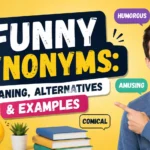
The best synonym for funny is hilarious. Hilarious means extremely funny, causing loud laughter, while funny can describe anything mildly amusing to very comic. Other close alternatives include humorous, amusing, and comical, each carrying a slightly different shade of humor for different situations.
Have you ever read the same word “funny” three times in one paragraph and felt something was missing? You are not alone. Writers, students, and everyday English speakers often reach for “funny” so often that their writing starts to feel flat.
Imagine describing a friend’s joke as “funny,” then their costume as “funny,” then their dog’s behavior as “funny” too. It works, but it gets repetitive fast. That’s exactly where synonyms for funny come in handy.
“Funny” simply means something that makes people laugh or smile. It’s a small, simple word — but English offers many colorful alternatives that add personality and precision. Whether you’re a student polishing an essay, a blogger spicing up a post, or just someone who loves funny stories, learning synonyms for funny will make your language feel fresh, human, and expressive.
Table of Contents
- Hilarious
- Humorous
- Amusing
- Comical
- Witty
- Silly
- Ridiculous
- Absurd
- vehement
- Entertaining
- Droll
- Playful
- Whimsical
- Goofy
- Side-splitting
Summary Table: Synonyms for Funny
| Synonym | Relationship | Direct Replacement | Difficulty | Best Used For |
|---|---|---|---|---|
| Hilarious | Near synonym | Sometimes | Beginner | Conversation, blogging |
| Humorous | Exact synonym | Yes | Intermediate | Writing, essays |
| Amusing | Near synonym | Yes | Intermediate | Conversation, articles |
| Comical | Near synonym | Yes | Intermediate | Storytelling, media |
| Witty | Contextual alternative | Sometimes | Advanced | Conversation, writing |
| Silly | Near synonym | Sometimes | Beginner | Daily conversation |
| Ridiculous | Contextual alternative | Sometimes | Intermediate | Conversation, opinions |
| Absurd | Contextual alternative | Sometimes | Advanced | Academic, literary |
| Hysterical | Near synonym | Sometimes | Intermediate | Conversation, social media |
| Entertaining | Contextual alternative | Sometimes | Intermediate | Reviews, media |
| Droll | Near synonym | Yes | Advanced | Literary, formal writing |
| Playful | Contextual alternative | Sometimes | Beginner | Conversation, creative writing |
| Whimsical | Contextual alternative | Sometimes | Advanced | Literary, creative writing |
| Goofy | Near synonym | Sometimes | Beginner | Casual conversation |
| Side-splitting | Near synonym | Sometimes | Intermediate | Informal writing |
Quick Facts Box
- Focus Keyword: funny
- Part of Speech: adjective
- Simple Pronunciation: FUH-nee
- IPA Pronunciation: /ˈfʌni/
- Syllables: 2
- Word Origin: From “fun” + the suffix “-y,” first used in English in the 1700s to describe something amusing.
- Other Word Forms: funnier (comparative), funniest (superlative), funnily (adverb)
- Formality Level: Casual to Neutral
Word Difficulty Level
Difficulty Level: Beginner CEFR Level: A1
“Funny” is one of the first descriptive adjectives English learners pick up. It appears constantly in daily conversation, casual writing, comedy, and children’s books. You’ll hear it most in spoken English, social media posts, and informal storytelling rather than academic or technical writing.
Synonyms for Funny: Detailed List
1. Hilarious
Relationship: Near synonym Direct Replacement: Sometimes Difficulty Level: Beginner
Meaning: Hilarious means extremely funny and makes people laugh a lot.
Difference: Hilarious is stronger than funny — it shows a bigger reaction, not just a smile.
Best Used For: Daily conversation, blogging, social media
Examples:
- My little brother told a hilarious joke at dinner, and everyone burst out laughing.
- The comedian’s opening act was hilarious from the very first line.
2. Humorous
Relationship: Exact synonym Direct Replacement: Yes Difficulty Level: Intermediate
Meaning: Humorous means having a light, playful sense of comedy.
Difference: Humorous sounds more polished and is often used in writing rather than casual talk.
Best Used For: Essays, articles, professional writing
Examples:
- The teacher used a humorous example to explain a difficult grammar rule.
- Her humorous writing style makes even boring topics enjoyable to read.
3. Amusing
Relationship: Near synonym Direct Replacement: Yes Difficulty Level: Intermediate
Meaning: Amusing means pleasantly funny in a light, gentle way.
Difference: Amusing is softer than funny; it causes a smile more than loud laughter.
Best Used For: Conversation, articles, reviews
Examples:
- We found the puppy’s attempt to catch its tail quite amusing.
- He shared an amusing story about his first day at a new job.
4. Comical
Relationship: Near synonym Direct Replacement: Yes Difficulty Level: Intermediate
Meaning: Comical describes something funny in a clownish or exaggerated way.
Difference: Comical often points to a visual or exaggerated kind of funny, like a scene or expression.
Best Used For: Storytelling, movies, media
Examples:
- The cat’s comical reaction to the vacuum cleaner went viral online.
- His comical facial expressions had the whole classroom laughing.
5. Witty
Relationship: Contextual alternative Direct Replacement: Sometimes Difficulty Level: Advanced
Meaning: Witty means clever and quick with funny remarks.
Difference: Witty focuses on intelligence and quick thinking, not just being funny.
Best Used For: Conversation, debates, writing
Examples:
- She gave a witty reply that left everyone impressed and laughing.
- His witty comments make him the star of every group chat.
6. Silly
Relationship: Near synonym Direct Replacement: Sometimes Difficulty Level: Beginner
Meaning: Silly means funny in a childish or foolish way.
Difference: Silly often has a playful, harmless foolishness that funny does not always include.
Best Used For: Daily conversation, family talk
Examples:
- Dad made a silly face to cheer up my little sister.
- We played a silly game where everyone had to talk backward.
7. Ridiculous
Relationship: Contextual alternative Direct Replacement: Sometimes Difficulty Level: Intermediate
Meaning: Ridiculous means so strange or extreme that it becomes funny.
Difference: Ridiculous often carries a hint of disbelief, not just amusement.
Best Used For: Conversation, opinions, storytelling
Examples:
- The ending of that movie was so ridiculous that we couldn’t stop laughing.
- His excuse for being late was completely ridiculous.
8. Absurd
Relationship: Contextual alternative Direct Replacement: Sometimes Difficulty Level: Advanced
Meaning: Absurd means extremely unreasonable or illogical in a funny way.
Difference: Absurd leans more toward “strange and unbelievable” than simply “funny.”
Best Used For: Academic writing, literary writing
Examples:
- The play used absurd situations to make a serious point about society.
- It felt absurd watching him try to fit an elephant costume through the door.
9. vehement
Relationship: Near synonym Direct Replacement: Sometimes Difficulty Level: Intermediate
Meaning: vehementmeans so funny that it makes people laugh uncontrollably.
Difference: vehementis more intense and informal than funny.
Best Used For: Conversation, social media
Examples:
- That prank video was vehement; I watched it five times.
- Her vehementimpression of the teacher made the whole class laugh out loud.
10. Entertaining
Relationship: Contextual alternative Direct Replacement: Sometimes Difficulty Level: Intermediate
Meaning: Entertaining means enjoyable to watch or listen to, often through humor.
Difference: Entertaining is broader than funny — it can include excitement, not just comedy.
Best Used For: Reviews, media, presentations
Examples:
- The show was entertaining from start to finish, mixing jokes with action.
- Our guest speaker gave an entertaining talk full of funny personal stories.
11. Droll
Relationship: Near synonym Direct Replacement: Yes Difficulty Level: Advanced
Meaning: Droll means funny in a quiet, dry, and unusual way.
Difference: Droll humor is subtle, unlike the louder, more obvious tone of funny.
Best Used For: Literary writing, formal humor
Examples:
- The professor’s droll sense of humor caught students off guard during lectures.
- Her droll remarks added quiet comedy to an otherwise serious meeting.
12. Playful
Relationship: Contextual alternative Direct Replacement: Sometimes Difficulty Level: Beginner
Meaning: Playful means lighthearted and fun-loving in behavior.
Difference: Playful describes an attitude or mood, not always something that causes laughter.
Best Used For: Conversation, creative writing
Examples:
- The kitten’s playful jumps made everyone smile.
- He answered the tough question with a playful wink.
13. Whimsical
Relationship: Contextual alternative Direct Replacement: Sometimes Difficulty Level: Advanced
Meaning: Whimsical means funny in a quirky, imaginative, and unusual way.
Difference: Whimsical suggests fantasy or creativity, more than plain funniness.
Best Used For: Literary writing, creative writing
Examples:
- The children’s book had a whimsical story about a talking teapot.
- Her whimsical fashion choices always bring a smile to people’s faces.
14. Goofy
Relationship: Near synonym Direct Replacement: Sometimes Difficulty Level: Beginner
Meaning: Goofy means funny in a silly, awkward, and lovable way.
Difference: Goofy has a warm, clumsy charm that plain funny doesn’t always suggest.
Best Used For: Casual conversation, informal writing
Examples:
- My dog has a goofy habit of chasing his own shadow.
- He gave a goofy grin before telling his favorite joke.
15. Side-splitting
Relationship: Near synonym Direct Replacement: Sometimes Difficulty Level: Intermediate
Meaning: Side-splitting means so funny that it makes you laugh very hard.
Difference: Side-splitting is an informal, exaggerated way of saying “extremely funny.”
Best Used For: Informal writing, storytelling
Examples:
- The comedy show had the audience in side-splitting laughter all night.
- His side-splitting story about the wedding disaster is a family favorite.
Antonyms of Funny
| Antonym | Simple Meaning | Example |
|---|---|---|
| Serious | Not joking; grave in tone | The meeting had a serious mood, with no jokes at all. |
| Boring | Not interesting or amusing | The lecture felt boring after the first ten minutes. |
| Sad | Feeling or causing unhappiness | It was a sad movie, with barely a smile in it. |
| Dull | Lacking excitement or humor | His speech was dull and put half the room to sleep. |
| Grim | Serious and gloomy | The news report had a grim, humorless tone. |
| Solemn | Deeply serious and formal | The ceremony was solemn, with no room for jokes. |
Words Commonly Confused with Funny
Word: Weird
Difference: Weird means strange or unusual, not necessarily funny — something can be weird without making anyone laugh.
Example: The noise coming from the attic was weird, not funny at all.
Word: Ironic
Difference: Ironic describes an unexpected twist between what is said and what happens, which is different from simple humor.
Example: It was ironic that the fire station caught fire, but no one found it funny.
Word: Sarcastic
Difference: Sarcastic means saying the opposite of what you mean to mock something, which is sharper than plain funny.
Example: His sarcastic comment about the weather made her laugh nervously.
Word: Charming
Difference: Charming means pleasant and likable, which doesn’t always involve humor.
Example: She has a charming personality, even when she isn’t trying to be funny.
FAQs
What is another word for funny?
Hilarious, humorous, and amusing are all common alternatives to funny, each fitting slightly different situations depending on how strong or formal you want your tone to be.
What is the closest synonym for funny?
Humorous is considered the closest exact synonym, since it can replace funny in most sentences without changing the meaning.
Can I replace funny with hilarious in every sentence?
Not always. Hilarious means extremely funny, so it works best for very strong reactions rather than mild amusement.
Is funny formal or informal?
Funny is a neutral-to-casual word. It works fine in everyday writing and speech, but words like humorous or comical suit more formal writing better.
What is the opposite of funny?
Common opposites of funny include serious, boring, and dull, since these describe a lack of humor or amusement.
Conclusion
Learning synonyms for funny gives your writing and speaking more color, precision, and personality. Instead of repeating “funny” again and again, you can choose hilarious for big laughs, witty for clever humor, or whimsical for playful storytelling. Try using these words in your next email, essay, or conversation your writing will feel more natural, expressive, and, honestly, a little more fun to read.